Dog Days, Retirement, Food and Island Life on Tenerife - an interview with John Searancke


We're taking a virtual trip to another sunny island, with another dog, dear readers... A few years ago, John Searancke and his wife Sally retired to Tenerife, one of the Canary Islands, taking Freddie the dog with them – hence the title of his first book, DOG DAYS IN THE FORTUNATE ISLANDS. John and Sally had met in Lancashire, where they ran a business together for ten years.

John, how did you choose ‘The Fortunate Islands’ (an old name for the Canary Islands) as your new home?

The decision was mostly made for us in advance, because we had bought a holiday apartment years before we moved over there permanently. We had chosen the quieter, greener, northern part of the island, that less populated by mass tourism. The pressure of our business meant that we took more and more short breaks over there, and we realised that we did not want or need to look further. Our valley is just perfect for us, and we fell in love with it.

What things do you love best about your island home?

Well, we love the climate. Here in the north, there is not the unremitting sunshine that the holidaymakers so enjoy in the south. Between us lies El Teide, a dormant volcano, and the highest mountain in Spain. With its peak capped by winter snow, it creates a micro-climate here in the Orotava valley, giving sufficient cloud and rain to grow vines and bananas, so everywhere is green.

We love the people too. Perhaps because they are islanders, they have been so friendly and welcoming to us. Any tensions have been allayed as our grasp of the language has improved, such that we can now even dare to communicate with tortuous officialdom in government departments.

I was asked a couple of years ago, by Island Connections, the main English language newspaper for the Canary Islands, to become their restaurant reviewer (poshly titled “critico gastronomico” on my business card!) and this has led Sally and I to superb meals in out of the way restaurants that no casual visitor to the island would discover on their holiday. Wonderful seafood, in particular, is here in abundance: the combination of a sub-tropical island, the warm Atlantic ocean and the proximity of the coast of Africa less than 100 miles away, provides a rainbow of different coloured fish for our dinners.
You say it’s a book about ‘hidden Tenerife’. Can you explain?

We are hidden away from the mass tourism that the southern part of this island is so well known for by the majority of tourists in Europe who come here each year. Most never leave their hotel and beach complex in the south, and so therefore never discover the hidden north of the island.

We live in the quaintly named San Fernando area, our apartment surrounded by old whitewashed villas with terracotta roofs, and larger fincas, the centres of banana cultivation for this valley. We think that we have world class views – and so did the explorer Humboldt when he came here over a century ago.

Should I really be revealing the secrets of our valley?

How did Freddie take to the move?
Freddie is a RSPCA rescue dog. Born in Lancashire, from eight weeks old he lived the first six years of his life in our Victorian family home with the seaside on one side and a large wood on the other. It must have been doggy heaven, and perfect for socialising.

To be, then, one cold and frosty morning, crated into a travel box, hoisted onto a JCB before being dumped into the hold of an aircraft, must have given him some pause for thought! But no, at the other end, where I was anxiously awaiting him, he took to Canary Island life like the proverbial duck to water. So much so that he unwittingly became almost the central character in my book, in which his exploits and friendships with new canine friends are fully detailed. He has an amazing social life, and we love him to bits. I have had wonderful dogs all my life, but, if I had to choose a favourite…

What did you do before you moved to Tenerife? Did moving there help you adjust to retirement?

Sally and I married a little later in life. For the last ten years of our time in England, we started and built up a commercial legal services company, introducing professionals in the north-west to new opportunities and supporting them as they took our products on board. The company grew too large by 2009 to handle without taking on extra staff and premises, so we sold out.

We have never been so busy since we retired. I know, I know, everyone that we have met has said it  to us, but it is so true! We have had to learn a new language, integrate into the Spanish way of life, take on a role for the local newspaper, and a hundred other things, not least of which was to take a month travelling down from the English Midlands to this corner of our Atlantic island, in our 24 year old Mercedes 300 SL – the trip of a lifetime, and with the exploits included in my book!

Is it a typically Spanish way of life?

It could be if we let it. But we are just so busy with the things that we do. I think that our young next-door neighbours (just the ideal Spanish couple) think that we are the reincarnation of whirling Dervishes. But sometimes, it is the perfect relaxation to put our activities behind us and soak back into the wonderful Spanish way of life, where everything is “mañana.”

How have you integrated into the local community and made new friends?

Well, it started with a Swede! A lovely lady became our professora de idiomas and also took us under her wing to meet others locally. We have centred our new life around the Spanish community and have perhaps unfortunately ignored the British ex-pats, but that is the way that it is – we came to integrate, not just to be seen as another couple of English holidaymakers.  Now, we are not short of friends, and most days we take a morning coffee in one of the many cafés in the villages around our valley.

In the book, you take us to many of your favourite places to eat out in North Tenerife. Have you had any memorable meals lately? What is your favourite local dish?

I research the restaurants that I think will be suitable for entry into the newspaper. I very seldom include ones that are on a tourist trail or those that will be found by a casual visitor just by walking round the next corner whilst on their holiday. Often people will come to me and tell me of a favourite. 

I am particularly taken by Guachinches, and make no apology for that despite the local furores created by traditional Spanish restaurants in the main towns. Guachinches – a completely new phenomenon to us, are small family run restaurants up in the hills, often in what can best be described as large garages. Spotlessly clean and ridiculously inexpensive, they are required by law to limit their choice of menu, and their wine too. The wine must be from their own harvest, and when it runs out, the Guachinche must close until the next harvest is ready to drink. I have had some of the best pork chops ever, anywhere in the world, in those Guachinches. Sublime!

What else should I single out? Well, paella is a hugely overblown dish in any tourist restaurant, and never worthy of the money. But, in a place that knows how to cook it properly, just so, it can reach extraordinary culinary heights. Look in my book for a perfect example at Los Silos.

Oh, and lastly, I am going to highlight the humble limpet. Scorned, derided and ignored because of its chewy consistency, much like trying to eat your old school eraser, it again can reach for the stars when prepared by one who knows. A good fish restaurant will have one of those small white sacks of fresh limpets, alive, alive-oh, ready for you to savour. Either local, or flown in on the plane every day from Galicia.

Has life there changed you?

We just love it here. Our lives have changed immeasurably. It is warm every day of the year, and the tourist beaches are busy. It rains, of course it does, but mostly in showers, soon passed over. The food is superb, the people friendly, the service outstanding, and we have no need for central heating. All those years ago, when we bought our apartment, we really did make the right choice. All three of us would agree with that!

You can find out more (and buy his delightful book!) on John’s website, www.johnsearancke.com.


A Tilos Shaggy Dog Tale

In early spring, I was preparing to leave Tilos for two months, and Lisa, the lovely half-Labrador (ahem... dubbed by young Kyriakos the 'Tilos Devil') would need to be walked and cared for when I was away. Ideally I wanted her to stay in her own house, where she has a local fan club.

A friend introduced me to the magical world of house-sitting websites. You list the assignment (‘seeking dog-sitter for affectionate Labrador in quirky house on small Greek island’) and offer your home for free to someone who in return will care for your pet. Within 24 hours of the listing going live, I had as many enthusiastic responses. 

Some, I guessed, were basing their love of the Greek islands on a five-star honeymoon in Santorini and perhaps wouldn't be cut out for the rigours of Tilos out of season. But there were plenty of suitable-sounding applicants, and the very first people to write sounded perfect: experienced, adaptable, nature-lovers, looking for a peace and quiet... They were keen to have their next assignment settled, so we had a long chat on Skype, in which I told them about the challenges of living on a tiny, fairly remote island, but nothing seemed to faze them. We shook hands on the arrangement. I was thrilled to bits.


Three weeks later, they changed their minds. 

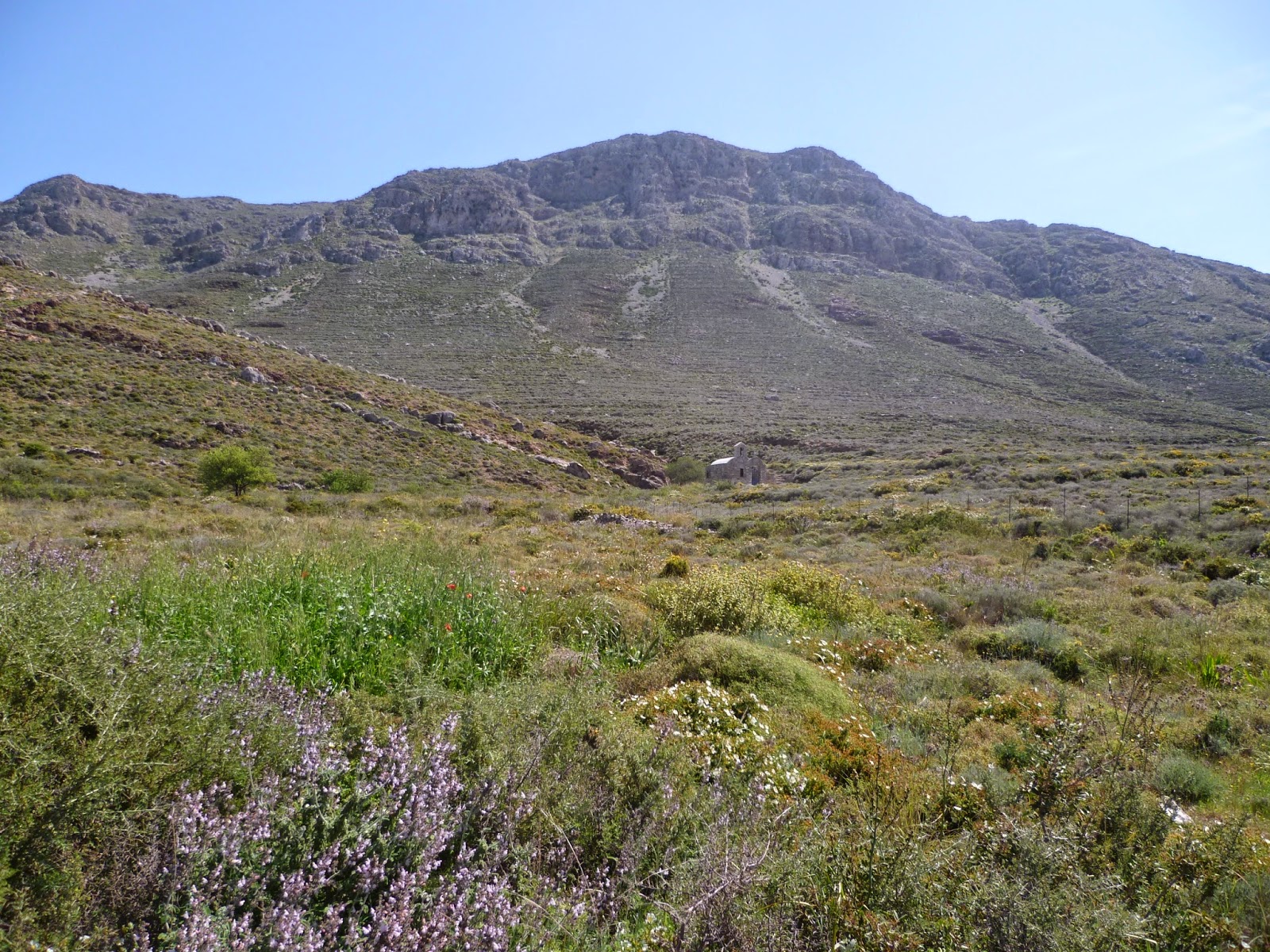
Panicking, I scrambled through the list of previous applicants. One was still available. He seemed solid, reliable and had experience of living on a Greek island. As I gave him a Skype tour of the house, however, he got quieter and quieter. He didn’t seem too excited by the Byzantine chapel my office overlooks or the ruined castle visible from the terrace, or the view of mountains and sea; I think he might have been hoping for an infinity pool. 

I wanted someone who would be happy: whatever the challenges of life on Tilos, it’s surely one of the most beautiful places in the world. When I told him I sensed it wasn’t quite right for him, his relief was palpable. 

Back to the drawing board.


As various house-sitters said they were no longer available, it suddenly seemed a ludicrous idea to go away for two months and hope to find someone to look after my dog. I got so stressed that twice I managed to leave the key in the ignition of my car and let the battery go flat. Leaving Tilos was causing me a lot of grief.


Then the first people came back and said they'd made a mistake by cancelling, and still wanted the assignment after all. There were extenuating circumstances, as they were living on an ashram and could only speak for an hour a day. Better the devil you know, perhaps? They seemed keen, and I had just three weeks before I flew out. We agreed again, and I relaxed and started packing. I caught up on the work I'd been missing during all this, and for good karma I booked them a fancy room for the stopover in Rhodes.

Over the next couple of weeks, emails kept arriving from them. 

‘Which internet site should we use to book our flights?'
'Have you got a couple of mountain bikes?’ 
I’ve got one bike, I replied. 
‘Could you get us another one?’
‘Have you got a juicer?’ 
Unfortunately not, I replied. 
‘Could you see if anyone has one they're not using?'
And then, six days before I was due to leave:
‘I’ve been diagnosed with a serious health condition. Several members of my family have died from it. Do you think it’s a good idea to be on Tilos?’
A two-hour ferry journey from the nearest island with a hospital, and there isn’t a ferry every day...? I had to say, 'No, don't come.'


The clock was ticking. I had just one card up my sleeve. A French couple had emailed to say they were travelling in the region, and to let them know if my plans fell through. What were the chances of them still being available? I emailed them at once. 

They were in Istanbul. They dropped everything, got on a bus the next day, travelled down through Turkey, slept a few hours, hopped on a ferry to Kos, and another ferry to Tilos, and arrived 24 hours later. 

Within a few days, they’d settled right in, and none of us could quite believe our luck. I’d been rescued at the eleventh hour, and they were very happy with their temporary home. Lisa seemed increasingly delighted with the new arrangement. By the time they dropped me at the ferry, she barely acknowledged my presence. 

Five weeks on? They've had a wonderful time exploring the island. And Lisa's had an amazing adventure with her new friends, as Guillaume's photos below show...


The final twist in the shaggy dog tale is best of all. They love Tilos so much that they are searching for another place so they can stay on for a few more months.


Interview: Sibylle Meder talks about the film THE ISLAND BUS


You’ve just completed the documentary film THE ISLAND BUS. How did living on Tilos inspire you to make this film?

Living in Greece - and maybe particularly on Tilos - cannot but inspire a filmmaker to make a film. There is something so theatrical and dramatic about everyday actions here.
I was a passenger on this bus for a few times a week, going to Livadia either to do my shopping, go to the bank, or meet friends. And pretty much every time, something worth a story happened. By now, I have seen so many of them that I find them quite normal. But when for the first time the bus stopped in the middle of the road and the bus driver shouted something out of his window, and then a man appeared from his house and handed over a bag of fresh eggs, which was then passed around to some passenger who would take hold of it until we reached Livadia and the eggs were delivered to the shop - I couldn’t help but try to imagine this in a bus in, say, London, Sydney or Berlin.
Of course, it has to do with the size of the population. So this might happen in a Scottish village. Yet, if you are on a bus in the Highlands - that’s at least what producer Lindsay Goodall who hails from Scotland tells me - it is unlikely that in the course of a 15 minute journey, you hear the life story of the old widow sitting next to you, the village barber recites a poem of a national Nobel Prize laureate and you share the vehicle with passengers from at least four other countries.

Learning more and more about the island, I realized what an extraordinarily mixed community this actually is. Saeed, a refugee boy from Afghanistan whose story of arrival we follow in THE ISLAND BUS, was first one of the refugees. When Lindsay and cinematographer George Geddes were on Tilos for our first trailer shoot, we heard him being called 'the boy who came'. A few weeks later it was 'Saeed'. And now he is a familiar personality on Tilos. Same goes for the other characters of the film: Marta, Sveta, Menelaos and the ubiquitous driver Pavlos all have their own story.
This is what I find so beautiful about the place and the story of THE ISLAND BUS: it is human-sized. For every statistic, there is a name and a face.
So it was the combination of a small island and village life with the particular fault line that Tilos and Greece in general resides on. This has been the melting pot of populations from East and West, North and South for millennia. That is just what the Eastern Mediterranean is. In a way, Tilos and what happens here is a microcosm of contemporary events in Europe and the world - and the island’s bus is a microcosm of life on Tilos.
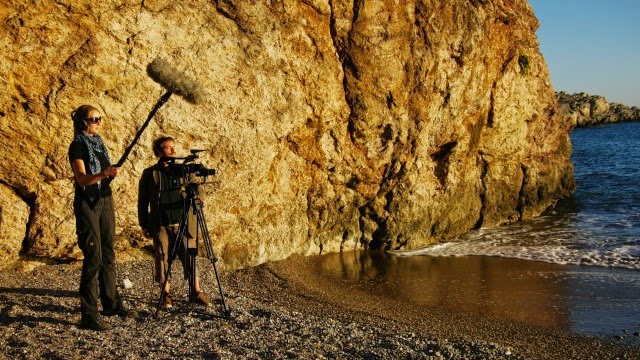
Another inspiration was that I wanted to find other filmmakers to collaborate with - but with a topic that would attract only those who are on the same page as me. When producer Lindsay Goodall of Beau Films and I first swapped ideas about the project, it was clear very soon that she enjoyed the quirkiness of Tilos as much as I do. Same goes for our German co-producers Anja and Mike Dehghan of High5Films and cinematographer George Geddes who spent his holiday being stuck in between tripod, feta tins and a bunch of schoolkids. They were persuaded to collaborate on THE ISLAND BUS by the style of the documentary - and the island itself. Like so often on Tilos, things just started to fall into place. Local musicians recorded the island songs for us, composers Tom Mangano and DJ Badre took my ideas about the soundtrack and turned them into something unique and exciting, sound designer Ali Murray and colorist John Sackey took time out from their busy schedules to apply their talents because the 'virtual holiday' on Tilos was so very different to some of the other jobs they are usually offered, German artist Viola Welker created our poster design - all these wonderful people were charmed by the island and our story about it.

How would you describe the film?

As a warm-hearted, sometimes tongue-in-cheek, sometimes gentle observational documentary. It is crafted to feel a bit like an independent fiction film, there are only few interview scenes, but mostly you get taken right into the action of life on a tiny Greek island.
The film follows the bus and its journeys from morning till night and from Christmas until the height of the tourist season in summer, the festival of Agios Panteleimonas on 27 July. Along the way, you accompany Saeed as he is looking for a new home on Tilos and for people to call family.
I would say it is a coming-of-age-road-movie-observational-documentary - with some of the most eclectic music mix you will hear in a while.


How would you describe yourself as a film maker?

I make the kind of films I would like to watch myself. No one had made a documentary about Tilos like this - so obviously I had to make one. Because that is what I wanted to watch. I have a lover’s approach to filmmaking: I fall deeply in love with the subject and then fight for it like only someone in that beautiful rage that is love can fight. That probably also means that I have a gentle approach to it. I like to laugh with my characters rather than about them.
To figure it all out and as a collection of resources for myself but also maybe for others who are thinking along similar lines, I have recently started a blog called The Happy Filmmaker (http://sibyllemeder.net/the-happy-filmmaker). I am searching for those aspects of life that we all know that bring us to a deeper understanding - or a deeper appreciation - of something. I like to focus on the positive - even in those situations and things that are usually perceived as negative. I like to search for what gets us beyond that. A quest for human resilience, maybe.
I have actually written a whole blog post (http://islandbus.wordpress.com/2013/07/03/i-fell-asleep-in-the-act-of-killing/) about what kind of film THE ISLAND BUS is and therefore what kind of filmmaker I am in response to watching THE ACT OF KILLING, one of the most celebrated documentaries of 2013 - which is a totally different film.

All that said, this is my first feature documentary. I am still starting out. Fortunately as directors, in most cases we don’t even get close to being recognized before nearing retirement age. So I am really still a newby. Who knows what kind of filmmaker I become when I grow up!

How do you find living on Tilos?

Never a dull moment. I don’t know what people mean when they ask me whether I don’t get bored. Sometimes I crave a bit of boredom! If you want to, the social diary can take over your whole life. There are no such things as impersonal interactions - you just go to the shop to buy milk and are in the middle of a drama - or a party. 
But of course, the amount of events like theatre, cinema, nights out is still limited and the distractions can be reduced to what nature provides. So it can also be like an intensive work retreat if you organize your life that way: the lack of noise, advertising and general 'stuff' can leave you in that zone of intense focus on your work.
With the added bonus that as a workaholic you don’t have to carve out some time to go to the countryside or to exercise. You just finish your work, step out the door and there it is: Nature. Can be squeezed in before dinner. That is a pretty healthy way of living - and working.
At the same time, you gotta love challenges. As you well know, for example we don’t have an ATM since Christmas, so we need to go on a two hour ferry ride and stay overnight in a hotel - all this just to take out some cash. We only have a boat or two per week in winter that gets us to things like dentists, vets, supermarkets, an accountant or a shop where you can buy a computer cable. You might be told that something will happen 'tomorrow' and 7 years down the track, there is still no sign of it. So this makes you immensely resourceful.
I used to laugh about it, then get annoyed about it, now I am back to laughing - and make sure I enjoy that fantastic view that unfolds just outside my window. I never tire of that: there is this beautiful deep blue bay and only the sound of the waves clasping at the shore just outside my house. When you see and hear and smell that, it is pretty hard being annoyed for too long.
For all the complications, another upside is that some things can be really unbureaucratic and straightforward. When I approached the late mayor of Tilos, Tasos Aliferis, about support for THE ISLAND BUS, it took him about twenty seconds of thinking. 'You need an office with internet access? Why don't we just put a table for you into the KEP?', and so the local council supported the project in-kind. His successor, Maria Aliferi-Kamma, reacted in a similar way. Things aren't made more complicated than they need to be if there is a handy solution. At first, I had qualms about approaching some of the film's contributors, thinking they might be shy of the camera. Not so! As soon as I came forward, people wanted to help and enjoyed the project. Things started to happen that I hadn't thought possible when I first had the idea for the film, and because everyone knows how to be resourceful, maybe this was the best place to start a project like that.

What does the driver of the island bus think about the film?

Pavlos has always thought it was an excellent idea that I made THE ISLAND BUS. He wasn’t too fond of being interviewed, but was more than happy to have me filming what was going on in his little kingdom time after time. He was happy to share all of his daily routine and at first thought it amusing that I took such an interest.
After a while we developed this collaboration where he would start co-directing. Just as much as I learned to know the bus timetable by heart, Pavlos started to make sure the radio was turned off when I wanted to record sound, drive slowly if he noticed we were filming out the window, initiate conversations with passengers and even stop by my office to tell me I should be on a specific trip for there would be so-and-so who I had wanted to film.
He loved the idea that he would turn up every so often in the film, like a recurring theme. At some stage I realized that he was going to be somewhere in the background in almost every scene, a bit like Hitchcock who always made a surprise appearance in his own films. After I told him that, we called each other Hitchcock for about 6 months.
Pavlos also appreciated Saeed becoming the main character of the film and he appreciated that I wanted to show the story of how this island community functions and absorbs someone new like Saeed into its network of people.
I have shown scenes of the film and the trailers while we were still filming and Pavlos usually laughed hardest at those scenes where he has a fit of anger about inconsiderate customers. When I had a screening of the finished film for all the main characters last winter, Pavlos’s only complaint was that I had cut the scene where he tosses a bag of bread two stories up to Sofia at the kafenion in Megalo Chorio. Seeing that I had made him delay that action for about 45 seconds until I was rolling camera, I guess he had a point.

When can we see it?

THE ISLAND BUS will be part of the Krakow Film Market screenings (26-30 May). The film has also been invited to another documentary festival and there will be a festival premiere this year (I can’t give any more details at this point, but you can get timely updates about all screening events on THE ISLAND BUS blog (http://islandbus.wordpress.com) or our Facebook page (https://www.facebook.com/pages/The-Island-Bus/164216330266023?ref=br_rs), and we are planning more screenings at festivals and a Greek premiere at the Goethe Institute Athens in summer 2014. Visitors to Tilos will get the chance to watch it in an open-air cinema set up for the occasion on the island this summer and autumn.