Water Dragons and Mr Browne

 
I was on the lookout for duck-billed platypus in the Wingecarribee River, but all I could see so far on the calm, mud-brown water were some duck-billed ducks, which were nice but not quite as exciting. As I looked down at the trail I spotted a shiny lizard, about as long as my hand, wriggling fast into the undergrowth - then another, and another, leaping from the rocks to hide. It was about four o’clock, and there was nobody else about, so probably they were basking in the heat from the sun on the boulders. Then a little further on I saw a couple of bigger ones, different, and as I stopped still, so did they.
These were over a foot long, pale green-grey with ridged backs and black stripes across their tails. They kept their eyes glued on me for the ten minutes or so that I watched them then reached slowly in my bag for my camera. I later learned that they were water dragons, native to eastern Australia, and they must have got used to people as the trail was close to the village. I’d only continued a few more steps when I heard a splash in the river below and saw something swimming like a wiggling arrow across the surface, before pulling itself up on the rocks. Sure enough, another water dragon.
The trail was just at the back of the village, and soon I was looking at a church that made me feel I was back in Britain, except for the towering pines surrounding it. This was the Anglican church, built in a Gothic revival style from stone quarried where I'd been walking. 
Down at the bottom of the hill and across the bridge over the river, meanwhile, was the Catholic church with its golden statue set in the ochre stone, which – especially with the deep blue sky above, and the heady scent of more pines – reminded me of the south of France. Behind it was a loo where the management had thoughtfully placed a sign, presumably for the edification of the waiting. Father William McGinty had arrived in Australia, it said, in 1847 from Dublin, Ireland, and was appointed first pastor of Berrima district. St Francis Xavier church, designed by Augustus Pugin, opened in 1851. Then it seems McGinty deemed his mission in Berrima complete, as by the following year he was pastor of Ipswich, Queensland. 


Berrima is in the heart of the lush Southern Highlands of New South Wales and today just 400 people live in the historic village in the curve of the Wingecarribee. It was rather grandly laid out in the 1830s in great confidence that it would become a county capital, and at one time had some dozen inns catering to horse-drawn traffic; there were bakeries and a market place and a military barracks. But it was by-passed, first by the railroad – the closest stop is Moss Vale, 9km away – and then by the freeway, which sadly is still audible at the quiet times of day, though hidden by dense forest.
Being by-passed was Berrima’s saving grace, for the sedate village now enjoys a status as one of Australia’s best preserved colonial pioneering settlements, strewn with pretty Georgian sandstone cottages with steep corrugated tin roofs. 
It has only one inn left, but a good one: Australia’s oldest continuously licenced inn, dating from 1834. It was first licenced to James Harper, a son of convicts who married a convict and became a police constable, set up the pub and then built himself a brick house now called Harper's Mansion, one of the most visited National Trust properties in the state. Perhaps Berrima's most famous building, though, is the gaol, completed in 1839 and still serving as a minimum-security prison. The second ever trial by judge and jury was held at the courthouse here, and the first man hanged at the gaol was the unfortunate Paddy Curran.
 
All of this, coupled with the fact that the Southern Highlands is a wine-making region and wineries abound nearby, makes Berrima a draw for tourists, with Sydney only an hour and a half away by car. Every other building seems to be a fancy ‘patisserie’, tea room or upmarket gift shop. The old general store has, like most, been turned into a cafĂ©. My mission to buy food – since we’re lucky enough to be house-sitting here - was in vain. If we’d wanted to buy some hand-stirred jams, a wooden duck in boots or something made from alpaca wool, we’d have been all right.
I was making my way around the park after my water dragon encounter, past the old bank and bakery (above), when I saw an ‘artist’s studio’. Through the open door I glimpsed what appeared to be a VW beetle painted with emus… I poked my head inside and was encouraged to come and look around. And thus I had my unforgettable encounter with artist Peter Browne. 
The paintings that covered the walls transported me out of leafy green Berrima - with its willows overhanging the lazy river - and into an outback Australia of searing heat, bare skinny gum trees and scrubland, with wooden shacks, lanky farmers, lankier horses and curious animals. The details made me laugh aloud, especially when I saw one called ‘Early Boat People’ showing a first encounter between Aboriginals and strangely dressed colonials clutching those rabbits that would go on to wreak such havoc.
(c) Peter Browne Fine Art
‘Well, you survived that!’ said the man at the table, who I guessed might be the artist, as I moved on from the first room into the second. We got talking, and he said some people asked him if he had any paintings of Berrima. ‘Why would I paint Berrima?’ he said. ‘It’s all English trees, English houses – what’s Australian here?’ He’d spent most of his time as an artist in the tiny settlement of Silverton, near Broken Hill out west, a place I’d tried to get a house-sit but had been thwarted by transport difficulties. I told him about the water dragons I’d seen on the trail.
‘Did you see the wombat poo?’ I laughed and said no, but then I wouldn’t really know what it looked like. He Googled it for me. ‘Look! They're cubes.’ I looked. Remarkably, they were. ‘And they like to leave it in little piles on rocks. Kind of puts you off lamingtons,’ he said, referring to the cube-shaped Aussie chocolate cakes.
After that, we talked about lots of things, mostly related to the sense of the absurd that shows up as detail in his paintings. He told me about the bush poet Banjo Patterson, who wrote Waltzing Matilda – ‘funny that we have a national anthem about a sheep thief’ – and how Spike Milligan lived for a while in Woy Woy and joked about his cork hat (for keeping off the flies), that ‘the bottles must have fallen off’. He told me he had noticed the news stations were excitedly reporting a shark ‘lurking’ off the coast – how do we know it was lurking? Was it loitering with intent? Maybe it was just swimming. The cute baby seal found on the steps of the opera house, though, wasn’t ‘lurking’, it was ‘basking’. 
Most visitors who came to the studio, said Browne, if they hadn’t come especially to see his work, were tourists who had only a few minutes to spend in each shop and were more in the market for a pot of jam. He was thinking of setting up a jam stall to cater to them too. Too many people only wanted to look at things they could buy. ‘Mall-itis,’ he called it.
His banter about Australian culture, especially that of the Silverton area, was full of references that sounded to me wonderfully colourful and somewhat surreal, such as a Turkish ice cream man who shot at a train and started a war. And the wonderfully colourful and somewhat surreal, or eccentric, of outback Australia was all around me on the walls of the studio. 


Happy Holidays...

Bet you thought I'd be frolicking on an Australian beach and preparing to throw another shrimp on the barbie, mate. Well, so did I, but here on the south coast of New South Wales, the weather's a little patchy. Cloudy. I did go for an extremely swift swim in a very cold ocean, but I thought we'd all prefer to see some sunshine from around this time last year back in Tilos...


 My heartfelt thanks to all of you for continuing to support the Octopus in my Ouzo and Falling in Honey this year. I've been using my time away to write a lot. I've also been having plenty of fun with pet-sitting adventures off the beaten track in New South Wales. I'll leave you with photos of some of the new friends I've made in the last few months. 
Warm wishes for the holidays, wherever you are!


A Field Guide to Happiness

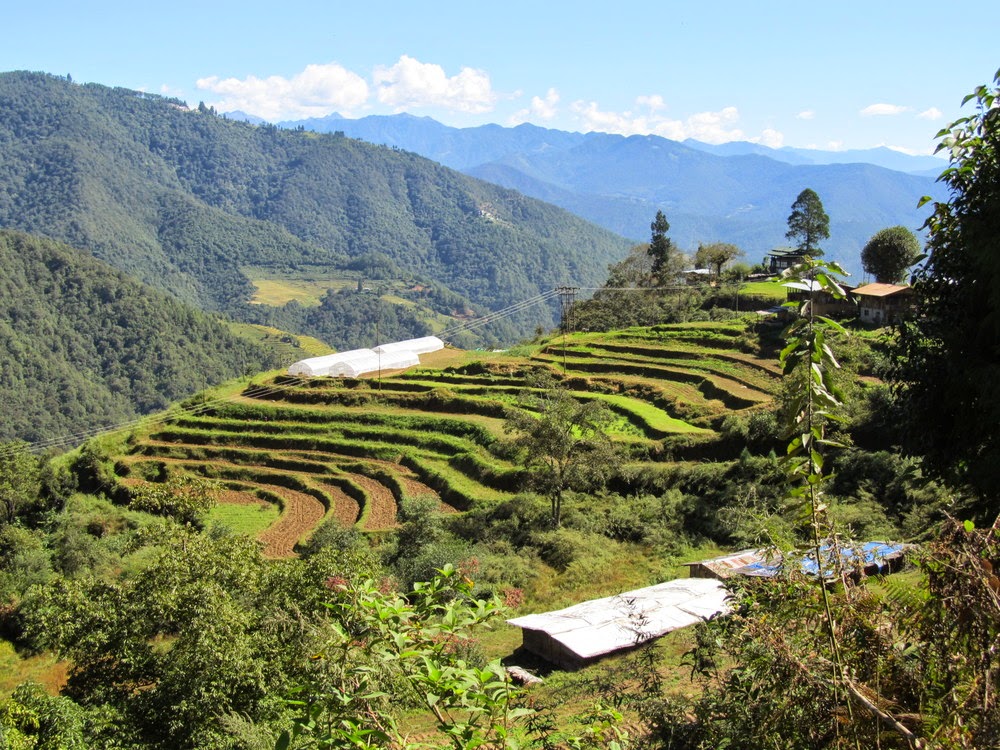
Linda Leaming has lived in the tiny Himalayan kingdom of Bhutan for much of her adult life and already published a memoir called Married to Bhutan. Her new book, A Field Guide to Happiness: What I Learned in Bhutan about Living, Loving, and Waking Up, explores how life can be happier in a remote place without all the trappings of modern life, the traffic and supermarkets and busy-ness; in a refuge relatively unpolluted by the rest of the world because of its remoteness.
          Having moved to the tiny, isolated Greek island of Tilos to make my own life happier, I can relate. I read this book so quickly that it was almost over too fast. One of the things that makes Tilos special for me is the extreme ‘otherness’ of life there, compared to many parts of the world, which helps me to make the most of each day. I’ve given such things much thought since, through force of circumstance, I’ve spent most of this year temporarily living in Australia. Throughout Linda Leaming’s funny, interesting, thought-provoking book, I found myself saying, ‘Exactly…’
          Living in Bhutan has made her think differently about pretty much everything, from time, work and money to nature, family and other people. And that isn’t because it’s been a walk in the park. Often it’s the challenges that have made her appreciate how simple happiness can be. She talks about losing your baggage, calming down and learning to breathe, illustrating each life lesson with Buddhist ideas and with smartly written, entertaining anecdotes from her life spent between Bhutan and her native Tennessee.
          With food, for example, the range of ingredients in Bhutan is limited; its remoteness means the shops ‘aren’t perpetually stocked’, and sometimes they have to make do. Yet they eat very well with what they have, and appreciate it. It’s satisfying, fresh, wholesome, natural.
          One of the things I’ve learned not to do in Tilos is to look at recipes for yummy things for which half of the ingredients will not be available. Better to buy what looks good, then make something from it; wondering what to have for dinner is not really something I need to think about, then. When I first arrived in Australia and could shop in large supermarkets again, the array of foodstuffs, rather than being exciting, left me baffled. How do you know where to start when you can have anything? The choice did not make me happier. Whereas in Tilos, the arrival of fresh vegetables after a winter storm has left us cut off for a week is a cause for celebration.
          Leaming has a beautiful way of describing the simple pleasures of life. Walking in high mountains, she says, ‘slows me down mentally and diminishes the volume of my inner voice’. The simple matter of getting from A to B, with nothing to do but ‘relax in that feeling of suspension’, induces a meditative frame of mind. There’s a lovely story she tells about divorce mediation (not hers), which has absolutely nothing to do with lawyers, and which has a happy ending. There’s also a delightful story about sending her husband Namgay into town to buy a part for a washing machine, and him returning instead with a salad spinner.
          Although on the surface it’s an easy-to-read, funny and accessible guide to increasing your inner peace wherever you are, the book also subtly demonstrates that one country can be more conducive to happiness than others. Bhutan is famous for its Gross National Happiness, which Leaming explains was originally a whimsical comment made by the fourth king of Bhutan during an interview, but has developed into something more like a manifesto. Government policy is determined not purely by economic factors but by consideration for the environment and culture. Which brings her back to the point that for happiness, both on a large and a small scale, it’s important to decide ‘what’s important besides money’. Clearly money alone doesn’t bring happiness, so why pursue it so doggedly? *
          Having lived in several different countries, I find it fascinating to observe the subtle variations in the way people do things, and I’ve always tried to absorb lessons; that’s also why I love books by people who immerse themselves in different cultures and have challenging experiences. Did Leaming learn to enjoy life more by living in Bhutan? Part of it was simply her character and life happening around her, but being forced to reassess her values constantly helped put it into focus. When you’re always learning, your mind is alert to small differences. If you’re changing your whole life, it’s easier to change the way you do the small things.
          There are parts of the book that you may disagree with, which makes me think it’s an interesting pick for a book club. Linda and her husband, a Buddhist painter, spend part of their year in the USA, where Namgay has a weakness for buying gadgets. There was a jolt for me when she mentioned him using a leaf-blower, which strikes me as a piece of unnecessary baggage that has potential to infringe on other people’s happiness: I am happy to say my peace and quiet has never yet been torn asunder by the noise of a leaf-blower on Tilos – though it was torn asunder by plenty of other things.
          But one of the pleasures of this book is its idiosyncrasies and its tone; she’s not claiming to be perfectly happy or enlightened or to have all the answers. It’s a book that makes you think while it gives you pleasure, and for me that’s a five-star reading experience.
          Bhutan seems to inspire beautiful books; this one will go on the shelf alongside Jamie Zeppa’s Beyond the Sky and the Earth, and Britta Das’s Buttertea at Sunrise. I say ‘on the shelf’, but I mean it metaphorically as I currently don’t have any bookshelves. How’s that for getting rid of baggage? Instead I’ll keep it on my Kindle and read it again more slowly, calming down and taking time to breathe.
A big thank you to Hay House for the review copy. And to Linda for the use of her photos of Bhutan (that's Linda and Namgay in the photo above), and for sharing her thoughts and experiences in this book. Here's a link to her website: 


(*note how I cunningly inserted a picture of a Bhutanese dog, clearly not in the slightest bit interested in pursuing money doggedly...)